
Surviving Miles Davis
My one and only childhood celebrity crush and first heartbreak turns 100

When I grow up, I want to be Miles Davis’s wife, I might have declared triumphantly, at the age of 7 while tucked primly into my leotard, tights, and pointe shoes like a risen sarcophagus learning to dance an afro-blues waltz to his version of “Round Midnight,” nodding off the edge of satin-wood and lamb’s wool into a bobcat’s prance, then a prowling center split, meeting my mother, bleeding Elton John’s lines you’ll marry a music man/ballerina, you must have seen her/dancing in the sand, to the tempo of “Solea.” I’m not a man or a nihilist, so I didn’t believe I could grow up to be Miles Davis like so many of the other obsessives who adore his cool cruel slice through the center of every mood with its prettier posture, a looser fist that somehow jabs better. Perhaps this is me entering Miles drag now, my In a Silent Way into Sketches of Spain, entangled in his svelte and glowing underworld with impossible familiarity. Proximity to him through romanticized desire, the life of the muse, seemed a suitable approximation to becoming him in my fantasy. He was still alive then, a painter in the prime of his twilight reorienting to weaves and Coogi sweaters, baggy pastel silks instead of fitted suits, Prince covers instead of Gershwin covers. He could morph into a style icon for any era, he was black music’s cheat code switching first Prince of Darkness, and I wanted the macabre fairy tale. I’m not sure when the fantasy began because it commenced wordlessly between the womb and the winter of my discontent with people who wanted to be just any man’s wife, just any man, just common and complacent; that seemed like suicide or naiveté, like squandering everything for a place, not in the sun, but in a cubicle or a tenement kitchen clipping coupons and savoring reruns of I Love Lucy and Sanford and Son. I would endure sharing one of those cramped units with a man if I could go home to the best music in the world, I convinced myself, if I could make it, if I could inspire it and my cohabitant and I could compose together night after night. I was born into this pathological insistence that daily life be made of grand high lyrics, relaxed epics, or banished to oblivion. I was sleepwalking with destiny, hated the Disney version, was ashamed of those who settled, loved the Blue Note, the Vanguard, the noon night of afterhours and the din in there all sweet nothings to me then because I was in no position to decipher it, lured toward that known unknown vernacular by some genetic defect or blessing, and toward the false glamor of service to exalted male artists I thought would be my only access. Black ones, mean ones, militant and malignant kings like my regal, sometimes evil father.
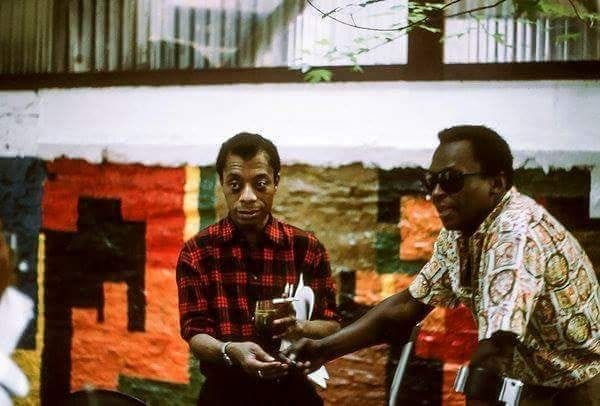
All of Miles’s wives were artists themselves, I imagined they were forming some kind of commune or harem together, a deliberate relay, only subconsciously aware that they were bound together by suffering in near silence, and that their collective distress was what thrilled me as I mistook it for a better secret, a less bitter secret, one about the bliss of private union, black love, fancy dresses with no wrinkles dream about grooving in them, delicate irreverence, Jimmy Baldwin in St. Paul de Vence with Miles, their nearly interlaced hands, their bashful erotics. I wonder if they shared romantic interludes, if Jimmy wanted to be his wife too, they’d be so nice to come home to. Jimmy too seemed bent on a domestic role that could compete with the gravity of his public duties, or absove him of them, a half calm, half histrionic affair in which to steal refuge. By the time I grew out of that recurring Miles-driven reverie and saw it for the scapegoat it was, I was dangling between its teeth, a bounty the canine brings home from an illicit jaunt through the neighborhood, rescue and rescuer and missing that familiar mask of the adulterated damsel in love as in flight. I had outgrown it after attempts to abide, to overwrite my own script with nostalgia for the dystopian 1960s I’d never been to except through the music, but I would not be afforded the luxury of an un-lived life in which centering a famous man made me the annex of his legacy and soothed my own wayward and brooding ego. I tried and kept exceeding them and deleting their misshapen passages in my story until they became the blasphemous headlines in old mildewed tabloids or unsent telegrams that had once seemed urgent now languishing in a heap of dead letters. As if nature itself has a quota for how many women can betray themselves in a tradition before the spell shatters into mandated self-possession, a weapon against misery, a state of emergency, a woman who could have been a man’s best accessory and chose rewilding. That ledge, the gusts of flabbergasted wind that almost tip you into the sea there, that Ayler turned Alice Coltrane turn unnamed story.
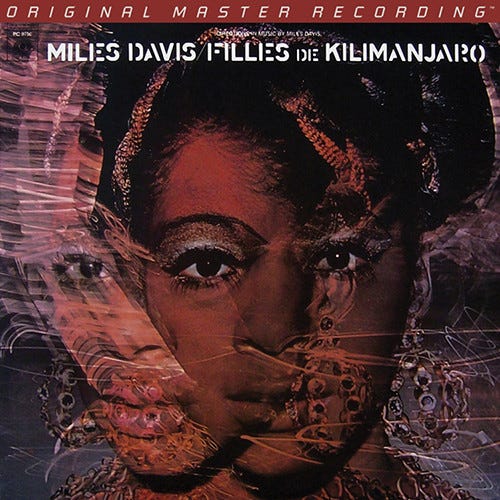
Now that Miles is one hundred, I’m contemplating how intensely I’ve idealized him through the years, with no remorse, and no real pleasure. That was several girls ago, several versions of myself prior to this one. Now I valorize the ones who escaped him with their whole names intact, who loved him and left him, who only looked back to make sure he was gone so they could listen to his music in peace. So much of this universally idealized and criticized man’s output was tied up in the feminine, teasing or seducing it, embodying it, whispering its brisk rages as his own, loving other men and making them a family called a band, several concentric matriarchal societies which he nurtures even still. I wanted in because I wanted the story firsthand, a deceptive mix of affinity and the investigative impulse, of wanting to see the whole soul without being its sacrifice at the altar, the energy it harnesses to get over. Now, I’m his friend, his scribe, his almost untragic hero, the remnants of a feminine archetype he trampled and tried to love surviving him with an open broken heart. He deserves to be celebrated because he is Eros, a rogue demigod— androgynous, polygamous, we all belong to him the moment we hear Kind of Blue, and bend over, keel, never stand the same way again. Could you imagine being so haunted by beauty and an ancient to the future originality as he is there, that you have to draw its blood, gash it, gut it, and when you do, it comes out even more beautiful, refuses to betray you. His wives, that music, sobbing to swing for you, so you find your way home.
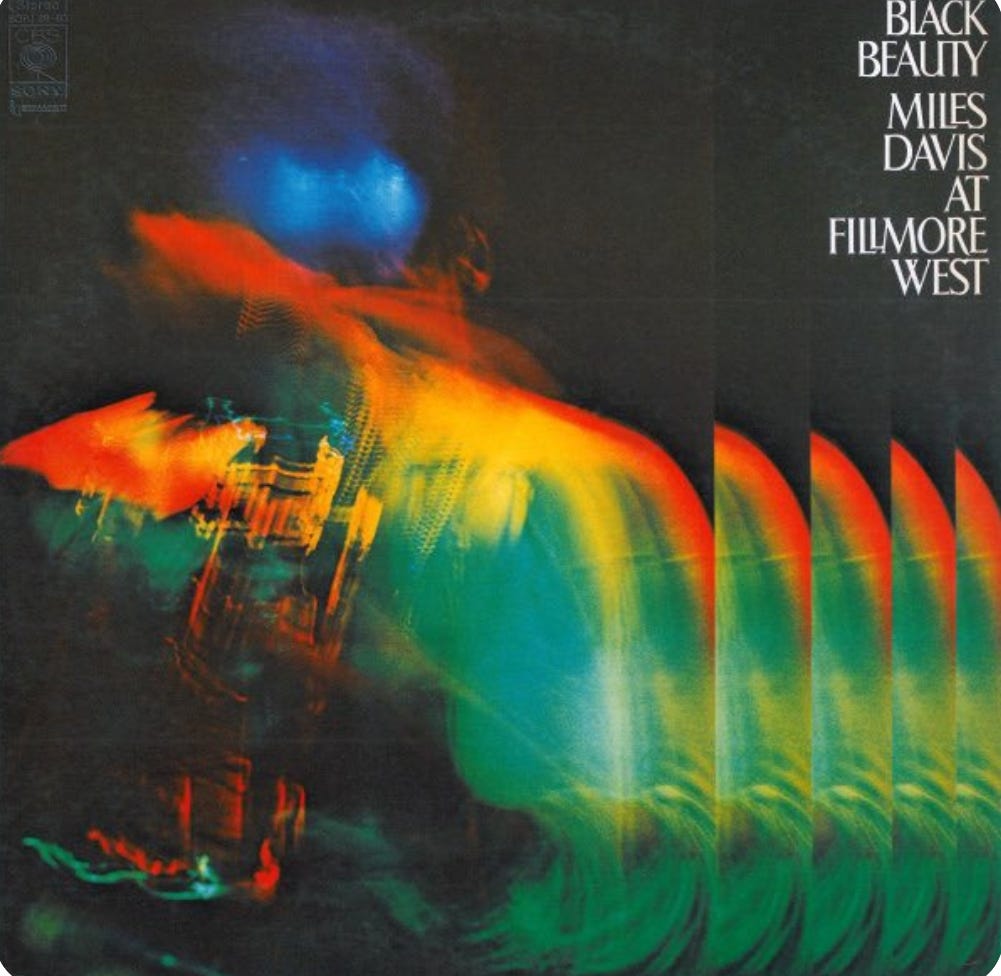
At lunch this week with Georgia Anne Muldrow, I jokingly said, I think Miles could still get it if he was alive. She understands me too well, knows I’m protected from myself even by some larger merger with truth— no he couldn’t, no he couldn’t, no he couldn’t, she warned, adamantly, and she was right. That enforced fragility I thought would never abandon me for true self-actualization is gone. I couldn’t give myself away to a genius with an evil streak in a fit of personal escapism; I don’t even believe in genius anymore. I think it’s all just obsession made tender and coherent for years and years that lets us be mistaken for messengers when we’re just willing to speak and be heard, having opened a channel or valve that never closes. And my obsessions are with something else now, how to love without being possessed, or why I’m possessed by this love of language and music that gets in the way of my basic bitch agendas. In the words of Marshawn Lynch, who also could get it yet can’t, I’m thankful, having recovered from that subtle and surreal trauma of being a woman who loves jazz and related sacred black technologies and has to find her way in without selling herself out.
—
I’ll write more on Miles at 100 in a longer form, and on his wives, who have names and forms, in the coming months. That Sonny Rollins died on the eve of this date feels like the actual relay between elegy and immortality, loss and resilience, that black music, like true love, trains us for. My forthcoming memoir is called Love is War for Miles for unsentimental reasons. As Fred reminded me on the phone last night, love is not a feeling, love is a practice, you show up to it. As if the war is over. Hello, forever.
grateful to be alive today if only to read your love story
Another fantastic piece of poetic writing. And I do believe your friend, Fred, is right---although I might add that with the practice you can't get around a certain degree of suffering---part of the practice is suffering and actually being able to continue to love despite the suffering. Lady Day knew this keenly and profoundly and we all know how deeply she suffered, and loved---and you can't have her music without her particular practice of love. Practice is not always fun but necessary for true greatness to emerge (no matter what Allen Iverson might say)