
Mukbang, Forever
On hunger in the age of the eating show

Competitive eating, fetish eating, good eating, all beautiful, American finishing school traditions of bewildering and charmless excess, but the Internet has made everything more wretched and capacious and food is among the great muses and munitions lavishing the virtual world. Food consumption was an early target of digital distortion and unhinged spectacularization which meant new or newly-commercialized styles of acquiring, studying, preparing, demonizing, cherishing, sharing, discrediting, and worshiping what we call food, emerged under the quickening and collapse of communication and passive spectatorship we call scrolling, to such extremes that paradigms about how we eat are auditioned by the algorithm and cast into our hearts like new religions on a regular basis. Keto, high carb vegan, plant based, carnivore, intermittent fasting, gluten free, raw vegan, breatharian, Ayurvedic, macrobiotic, eat for you blood type, oxalate free, and never forget GLP1, aka Ozempic, if you want the pill form of a gastric bypass.
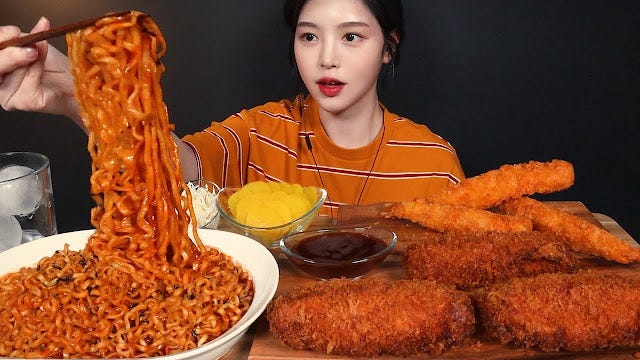
Some people with advanced eating disorders, most famously Youtuber Eugenia Cooney, became famous for wasting away on video and glorifying their dysmorphia with positive or astonished feedback from audiences. She appeared skeletal and emotionally frail online for years before a recent disappearance that has many speculating she may have died. But what did we expect to happen to bodies in these pre to post-matrix digital prisons, distracted from listening inward by constant stimuli, distracted from the nitrogen-heavy mineral depleted soil pumping GMO produce into the Amazon-owned Whole Foods on every corner in New York where more family owned bodegas or fruit stands might have been otherwise. Whole Foods, where soon you’ll be able to pay with a microchipped fingerprint like it’s a futuristic commissary, which it is. Whole Foods, Where I spent hours after dance classes at the Ailey School in New York, basking in snacks and immaculate air conditioning and doing hood rat stuff with my friends. To expend some of the anxiety around the new supermarkets lit like commercial art galleries, and decant some of the residue of fast food empires we should abandon but can’t for their convenience and dominance of the average urban and suburban landscape, we take to biohacking, poly-vagal theory and nervous system resetting with supplements and IVs that claim to remove senescent cells from the body, that we may live forever. Capitalizing on the frenzied demand to redefine food and nutrition, many have taken to eating for one another like divas might sing for you on any stage, with insatiable appetites for making an event of themselves, something to broadcast and share, a surrogate Internet family dinner; you can watch them eat while you eat, they’ll chat with you, rate the food, discuss its flavor or lack thereof in intricate detail, bow— adieu. And if you’re still lonely or curious after one installment in their food diary, you can enter the archive and binge-watch and binge eat with them in an endless loop.
My first memory of the incipient of this concept is 2004’s documentary Supersize Me, in which a man who wanted to expose how damaging McDonald's is to the body, ate three meals a day at the franchise for a month; by the end he was sick, had gained weight, and seemed dejected like an addict, his experiment had worked too well. Twenty years later, he is dead. He died of cancer in his early fifties after a cancellation due to sexual misconduct. The film’s success at proving what we already know and his relative disgrace thereafter, was an omen for the coming wave of malignant eating “content.” Circa 2009, as South Korean culture shifted and more and more people there were living and eating alone and spending their days engaged in speechless, alienated labor, lonely hearts took to streaming platforms and began eating with one another while live-streaming in their homes, alone together, a state romanticized by a jazz standard but prone to inducing pathological attention seeking in real virtual life. At this crossroads of the pathetic and the empowering, where self-soothing meets self-medicating meets self-sabotage, all using that which is supposed to nourish us and keep us alive, a society within a society grows unchecked. I remember seeing some of the proto Mukbangs excerpted in thirty minute clips on YouTube and being appalled. Thin, almost diminutive Korean women with their famed glass skin and intentional neoteny, performed gluttony like salespeople filming infomercials for early graves. A plate in front of them might be stacked with a cartoonishly large portion of fried chicken or pasta and they spoke softly and extemporaneously as they inhaled all of it. I wondered if this was some kind of joyous imitation of minstrelsy, some sexual fetish in the making, some new representation of bulimia, or all three coalescing to offer us such cinema, such intoxicating disgust we surrender and watch like test subjects in a sad scientific study about our susceptibility to being entertained by absurdity and sorrow masquerading as exuberance. Early on, the top earning mukbanger in South Korea brought in around nine thousand US dollars a month in tips. It was only a matter of time before Americans noticed and appropriated this new and lucrative vocation, and inflated or supersized it into an even more ridiculous gimmick, as is our national talent for the remix.
A 1950s style buxom blond woman named Trisha Paytas, started what is considered the first Youtube channel devoted to Mukbang in 2015, opening the gates for infinite initiates, immigrating to mildly pornographic public eating from less revered ghettos of Internet fame. I discovered Trisha when a didactic vegan Youtuber in Australia who had pioneered a diet centered around thirty bananas a day, posted click bait videos like a pastor of a mega-church might, saying if Paytas just lets veganism into her heart the demon of overeating for money would leave her body; the banana girl would be her coach and guru, she assured, mafias crossing territories to scramble their geographical destinies. Obviously the irony was missed, two competing manias butting heads, and both blond women making a lot of money eating for the internet.
It was in 2017 that I found a young black Mukbang artist named Jasper whose work in the medium was so riveting I watched for the vibes like a regular convert. I watched for the company, ate cut papaya or mango and gawked, really, and swooned as he recounted stories of being black and queer and hungry in the South. He often engorged on seafood boils that could have fed two large families and talked about anything on his mind. I paused the videos looking for the headlines on the newspapers he spread out on the table to ink the shellfish and protect the wood beneath it, like I was a detective and he’d been abducted by a local cult and the newsprint carried his hostage notes. I wrote a poem for him called “Your Mukbang Made me Weep,” after one episode of his eating show haunted to me like it had been a suicide attempt or last supper. He died the Thanksgiving of the year I wrote it, I believe from complications from his upwardly mobile side hustle. And more and more channels sprung up in the wake and in spite of him and what I’m sure are many other silent martyrs to the eating show universe. When people failed at more humane approaches to Youtube popularity, like posting ‘what I eat in a day videos’ or vlogs or makeup tutorials, they would pivot to eating shows and become icons almost overnight. To keep it up, like inverse athletes, they would have to keep indulging, and to many of them it was worth it; they were becoming rich for eating good. The most grotesque iteration I know of this two-way spiral came in the form of an influencer who calls himself Nikocado Avocado, likely because he started as a skinny raw vegan and then broke that diet lasciviously, and like a man who had just rediscovered his free will, got into Mukbangs, eating until he became so obese it was hard to look at him as he crammed food into himself like a monster, making it look deviant on purpose, almost making fun of his viewers or daring them to keep tuning in as he ate himself to death. He disappeared and came back skinny a few months ago after several gastric bypass and skin tightening surgeries. Is this the kind of epic hero society needs now? Kings of the yoyo diet performing feast as famine damns the earth.
Apparently it is, and as Youtube gives way to Tiktok as the dominant micro-celebrity platform, at least for the time being, and our looking becomes more ephemeral and more like addiction, like pulling a lever on a slot machine in hopes of jackpot, videos in any category just spring up like tiny miracles that you can also train to mirror favor or despair and anything in between back to you. Many of these videos are eating shows, Mukbangs, modified and shortened for the new shattered attention spans. Most disturbingly, recently, I’ve seen more and more black children, some of whom can’t even speak in complete sentences yet, made into the stars of these shows. One of the most successful in this category is a black father/son duo, who gained their viewership for eating fast food together, almost exclusively greasy takeout, almost every day the kid has burgers and fried and chicken from some name brand outside place, often in adult portions, and the family is making a lot of money every time this cute child bites into McDonald’s beef or well seasoned fry from chick fillet. Day after day you can watch him do this on their archive and it’s devastating, sometimes even borderline obscene if you let your mind take it in, but it’s viral, and almost famous, so it won’t stop until some other force intervenes. They’re just one of many. A black girl, also a toddler, is earning brand deals and mass appeal for her filmed eating shows, the difference being she prefers fruit and salad with her entrees and is very precocious. The similarity being she’s making her family a lot of money for camp eating that doesn’t quite know it’s camp, at first glance it could be wholesome, they could be building community, bonding in the purity of dinner hour quality time, but this is not quite what they’re doing. A baby is being filmed while eating, trained to eat on camera, readied for the mukbang civilian army wherein they can enlist for life. The classic mukbang styles also perform well on TikTok, the ones where adults just eat a lot and talk a lot and hit send and earn a lot for this new form of semi-passive, semi-tragic labor, this new mass-appeal entertainment. It’s surpassing reality TV because it functions more like a simulation, you think you’re in it with them, that they’re your real live dinner guests, hosting you as you host them.
The famous eaters and the parents who invent child star eaters of their kids mean well, it’s just that it’s unsustainable and sinister beyond their private intentions. And the backlash is built in, as fad diets and Ozempic and what’s now called Skinnytok™ and any internalized shame from the body’s memory of the minstrel show, to which the eating show is both related and defiantly opposed. Since mourning Jasper and becoming attentive to this new fixation on watching one another eat no matter the cost, I’ve tried let it go, it’s just a part of how we co-exist now, and we shouldn't police one another’s habits even if they’re on display to be analyzed and sold and either imitated or not. But lately that performative casualness of the Americanized voyeur feels like betrayal. Now we’re co-hosting a gridlock of eating shows and grooming one another in the skill of over-consumption as thrill and gambling addiction, while a famine intensifies in Gaza for all to witness virtually. Now what was an isolated pathology, feels like a form of aggression, an aggressively flaunted opulence that is both a lie and an alibi. Where were you when an entire population was being starved and ethnically cleansed, civilians bombed while waiting in line to maybe receive a ration of bread at a half bombed bakery? Watching some kids and Korean women eat bottomless plates of food for a living. It doesn’t feel right that these two phenomena share one world. That people can die of eating good and die for lack of any food in the same so-called timeline. If the quantum field is real, we should be capable of balancing the scales just a little, we should be able to stop using food as a bio-weapon, and to stop ourselves from passively watching both sides like numb referees in an intramural tournament. We’re all becoming willful puppets in a gameshow run by empire but if anyone askes, we’re just living life, keeping on, etcetera, we cannot be indicted for these betrayals of ourselves and others, expressed in sedentary lives, silence and leisure, we don’t even have to articulate what’s happening, when we do we ruin parties and appetites.
—
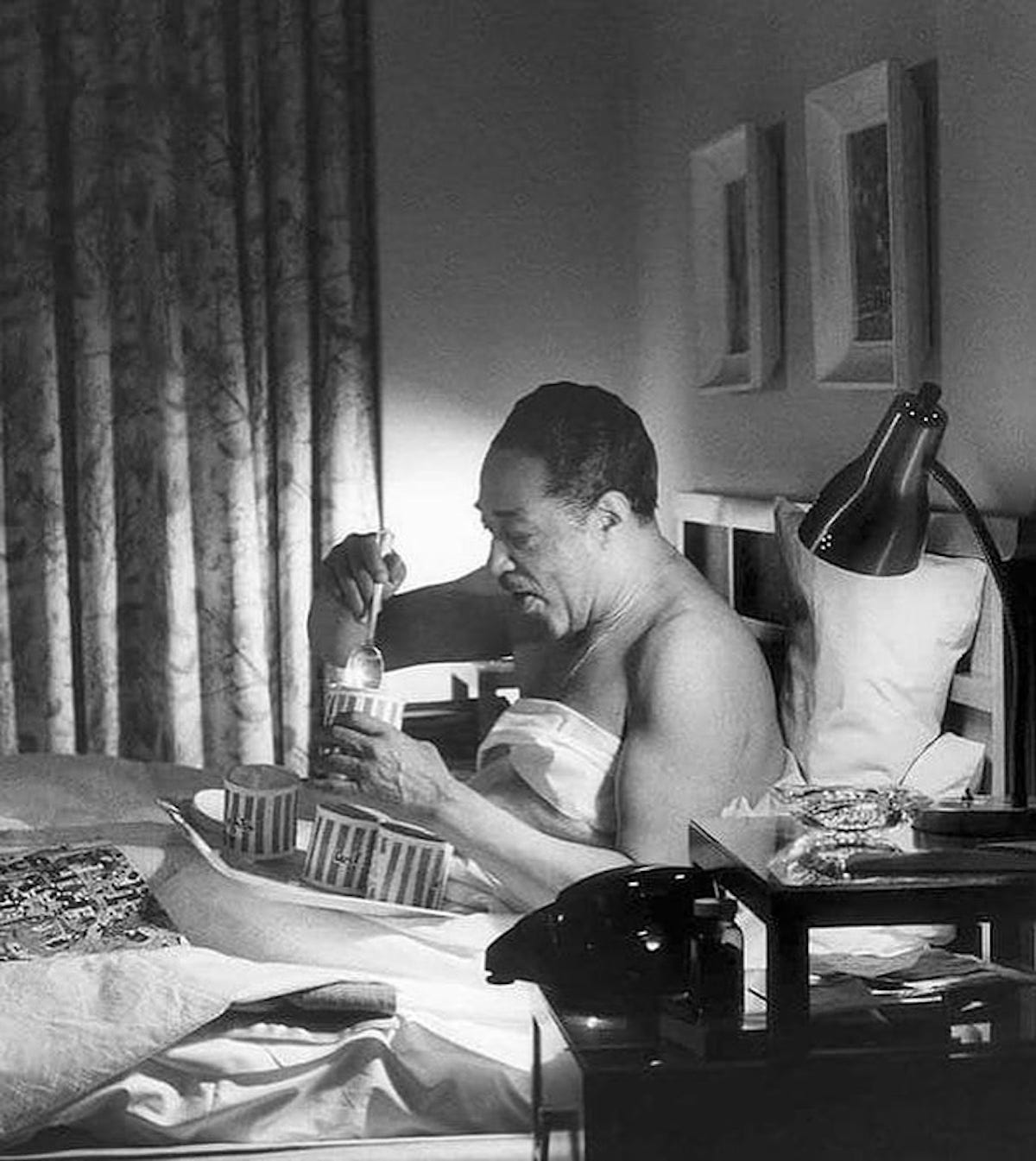
When I look up the term co n f e s s i o n a l e a t i n g, which is what I want to call this idiom of choreographed ravenousness, the only corollary I find is the Eucharist in Catholicism, the sacrament wherein bread and wine are consumed to symbolize the ingesting of the body and blood of Jesus. You must confess any mortal sins and be cleansed of them before accepting the symbolic flesh of the savior. Some call this ritual, confessional eating. What I mean when I use the term is more secular, maybe even profane. I mean we are eating our weight in sin and shame as if under etheric work-for-hire contracts and with no sign of expiring, and this new form of crisis acting feels like perverse karmic retribution for our ability to block out and override other peoples’ suffering by manufacturing, centering, and commercializing our own. There’s nothing to be done about it, Jasper and many nameless others form the Jesus archetype of the eating show economy, and we let them die for our sins, we even cheer them on using enthusiastic new colloquialisms like my show is on. Whatever crimes we are hoping to expiate with these mostly undetected transactions, remain unforgiven. I can’t forgive you. I can’t forgive myself. This is where the reconciling might begin.
—
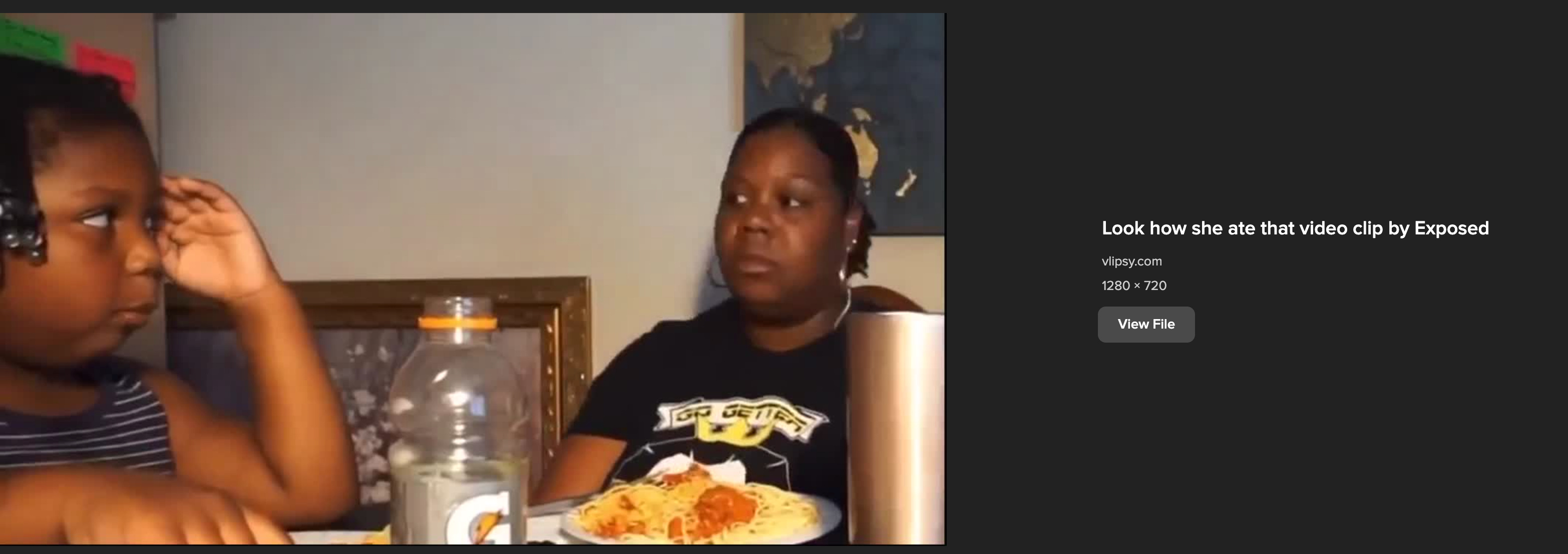
Once upon a time in Los Angeles, one of my favorite human beings to ever walk the planet, Sun Ra, née Herman Blount in Birmingham, Alabama, a name and birthplace he renounced to be born again of Saturn, would disappear for hours on the middle of the day when expected to be rehearsing the band for concerts. When asked where he was stealing away to, he responded in his typical forthcoming manner, letting the inquirer know he was going to Sizzler, a local buffet style restaurant, to order their all-you-can-eat Rainbow Trout. He would wear a full costume including a cape and bedazzled skull cap. He would be his own occasion, a magician from Magic City, Sad turn turned glad. I have no clear explanation for why I find this lore as redemptive as I find the modern day eating shows unbearable. It might have something to do with how Ra metabolized everything he took in, turned it into gorgeous, timeless music making him an athlete of sound always training even when feeding himself, it might have something to do with the fact that he didn’t set up a camera in Sizzler and broadcast himself and the trout, or it could be that the dysfunctional eating shows of late lack that kind of whimsy and feel forced and mercenary, a little mechanical, a little diabolical. It’s me who has to stop watching, to make them disappear from my algorithm, but their ghosts are all around us, and have no obligation to spare anyone, every tongue shall confess, they murmur, paid soldiers of the doomed republic—look how she ate that, they gleam.
Thank you !
impossibly good and humane. you are a wonder.