
Curtis Jackson vs. Sean Combs
Notes on the new Diddy documentary and why it's necessary to bring back shame

It’s time to stop being sentimental about the fact that all of your desires have been cultivated by psychopaths and losers avenging their deficiencies in heart, spirit, talent, and basic sanity by recruiting the best people they know to help them do and sell imitation evil. These psychos cannot even be authentically nefarious, they are too weak to be that decisive and have to vacillate or surrender to entities when they want access to bad deeds and repent when they want clemency for what they’ve done under the influence of forces they don’t even understand. These are the discarded souls carried on the wings of flying monkeys in the clinical psychology sense where that term describes those who venerate and enable narcissists and psychopaths, ingratiating themselves to these wicked misfits for reasons we may not understand. Black music has been infiltrated by this loop of psychopathy and enabling, and its ring leader is Sean Combs, groomed by Andre Harrell and Clive Davis, along with his mother, Janice and the ghetto fabulous lore about his father who was shot dead when Combs was only 3, and maybe all abetted by a deep state agency with no title but a recognizable pattern— find the someone who has been traumatized into blind ambition and train him in blackmail and ritual sacrifice until he believes he’s self-made. When he’s become ungovernable, put him down, or you might not have to, he’ll self-sabotage and take those he’s closest to with him, and we’ll be busy constructing his successor if he hasn’t already made his sons and journeymen into one.
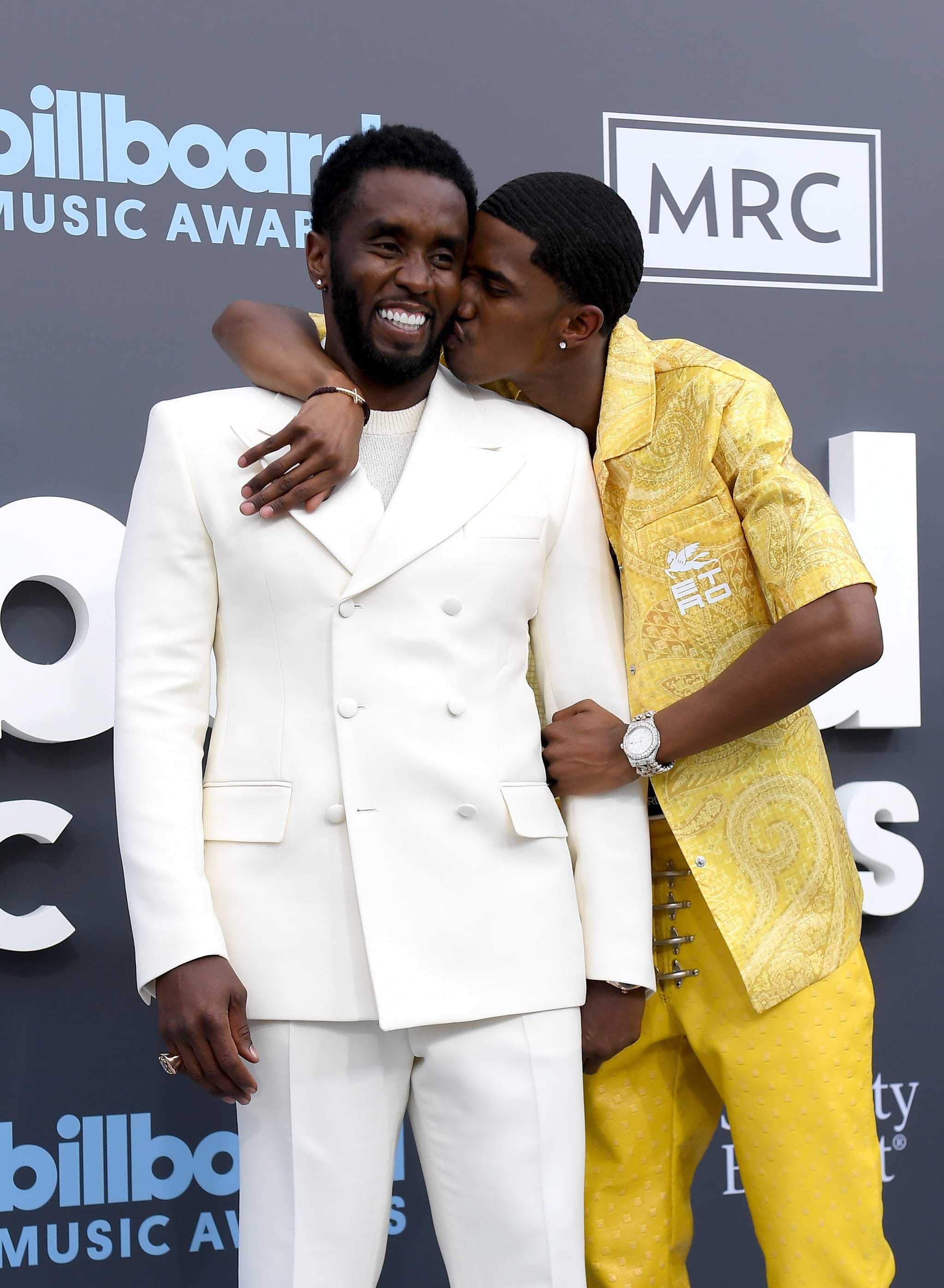
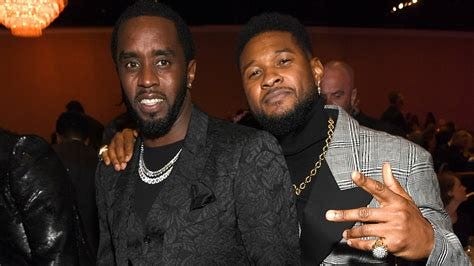
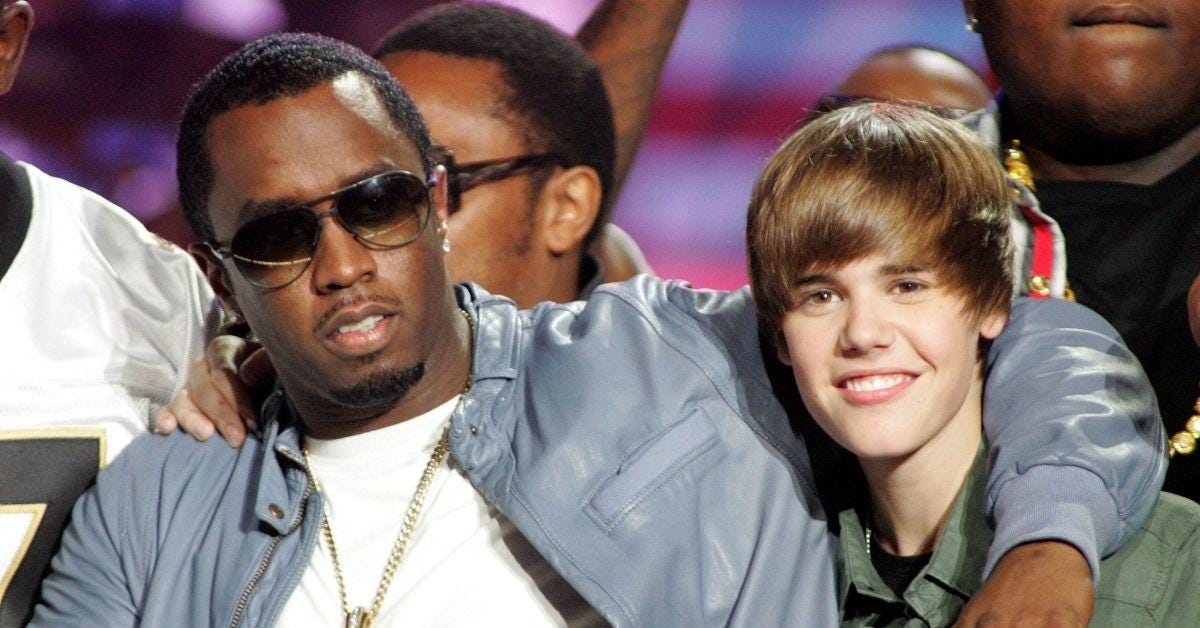
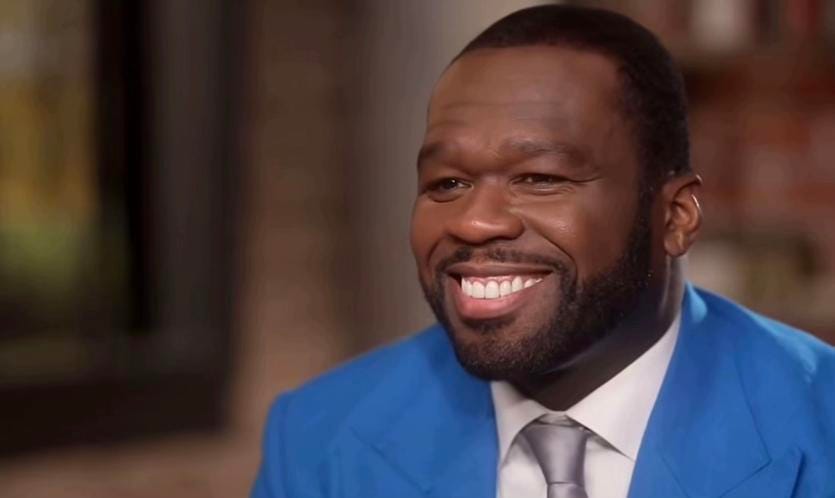
In the case of “Diddy” or Combs or “Puff, “ we have a true buffoon, and the new four-part documentary chronicling his rise and fall in dreadful detail, reminds us that the spirit of the minstrel, a mask of death on his face, can also be a serial killer and a rapist off stage and celebrated for this as long as he keeps putting on a satisfying show. Fifty Cent, glowing on the press tour like a man who is finally receiving overdue retribution, did the honors of producing for director Alexandria Stapleton. The unconfirmed theory is that Fifty (Curtis Jackson) was offended when Diddy asked if he could take him shopping, which is stage one of his system of abuse and sexual deviance. A more encrypted rumor that feels truer is that Diddy might have had a hand in the death of one of 50’s close friends. Across the series we learn Diddy may have had a hand in many many notorious deaths and injuries. There’s the inaugural massacre at a celebrity basketball game Combs hosted at City College in New York in 1991, where nine people were trampled to death storming the gates. Archival footage finds him musing about how the controversy made him famous. Then there’s Tupac, his alleged killer confessing on tape that it was Diddy who, also allegedly, promised him one million dollars, which he never paid, for the job. Then Biggie—we learn it’s very likely Diddy had him killed and then made his estate pay for his own gaudy funeral afterwards. But he didn’t stop there, Combs then made a hit song elegizing Biggie, which made him more famous. We learn of his intention to kill Kid Cudi, of his refusal to pay artists on his label for their work, of his allegedly GHB-laced baby oil that allowed him to collected sex tapes of drugged men and women who didn’t even remember they’d been raped some of the time. And we learn of his betrayal and habitual sexual assault of his closest and only childhood friend, Kirk Burrowes, from whom he revoked the twenty-five percent of Bad Boy Records he’d owned and earned by helping run the label, using extortion and the threat of violence, when Borrowes wouldn’t tamper with Biggie’s contract after he’d been killed.
There’s little mention of the death of the mother of four of Combs’ children, Kim Porter, in the docu-series, though we do learn she was not a ready-made flying monkey and could have suffered consequences for her recalcitrance. He did beat her too and become addicted to Percocet after an injury during one of their fights. But what do we really learn, being inundated with what some of us already either suspected or knew about this unctuous stain on the history of black music and his pathetic lifestyle? For me, it’s a repeat lesson in the unlimited betrayals and phantasmagoria of what is sold to the masses as popular, and the coward’s spirit that allows these transactions to go through in our culture over and over again until they become tenets of unimpeachable cult we’re all in together, some of us voluntarily, some by force.
For this man to have been idolized and his depravity overlooked and even supported and encouraged by many as “the culture” or black excellence™, the average consumer has to be so disembodied, desperate for the approval of others, and fundamentally insecure, that a persona like Diddy’s becomes aspirational, they see themselves and their own potential for come-up in him. To admit he’s terrible would be to turn their own past where they were imitating the lifestyle he sold, into a litany of errors and gimmicks. Their egos can’t take it, they’ll think of him fondly as an abused child who made it out of the hood by any means necessary, maybe they’ll think of him as revolutionary, like a hoodrich Malcolm Little if he had never attained the X. Suddenly the whole country is singing along to a requiem Diddy made for a man he had killed like we’re in a death cult and the entire entertainment industry knows it and decides to keep attending his house parties and yacht parties and giggling and toasting and selling you a maniac’s dream of white linen and dark masks until you’re spellbound. If you ever found Diddy cool or desirable, or worse, admired him, a part of you has been possessed and tainted, taken under and harvested for the regiment of minstrels and mistrials over which he is general.
And let’s talk about Juror 160, featured in the 4th act of the series, smirking incessantly as if in homage to her defendant Sean Combs, who also never closes his mouth. She seems to be gloating about his exoneration for the bulk of the RICO charges and the light sentence he received in the US vs. Sean Combs earlier this year, and she appears starstruck, even retroactively. This is her moment, her big break. She is an archetypal energy somewhere between pickme, flying monkey, apologist, and those Gen X coded pseudo abolitionists who have too much pride in the 1990s to call out the decade’s persistent corruption and inflated sense of progressivism rooted in the sunken place. She represents the loud minority who can’t give up their death cult memberships or sustain rigor for long enough to recant allegiance to the idea of fun sold to them in industry-funded music videos carefully crafted to make you want to bounce around in jacuzzis and nondescript mansions reciting poems about lust and objectification. As painful as it is, we have to admit that every method of catharsis sold to us under that rubric was carceral, false, and primer for the king of freak offs to do more misdemeanors. It was all smoke and mirrors, it was all a dream, we used to read how they shot the dreamer right on Wilshire Blvd. and charge it to the game. Now that we can name that assassin and understand his motives— envy, ugliness, self-loathing— if we dismiss it and deny being victims of a mass mind control experiment for which he is at the patient zero, we are all juror 160, so eager to feel cool we’ll refuse to shame the devil and his minions.
Keffe D, the man who is heard on tape during the documentary, confessing to Tupac’s murder, which he claims Diddy hired him to commit, is set to go to trial for the crime in February of 2026. This will mark thirty years since the year Tupac was murdered in Las Vegas when he was only twenty-five. He was so beautiful the Internet is full of women who watched this docu-series, and are now effusively pining after him, marveling at his eyelashes, his intonation, his charisma, how loving and supportive he was of Biggie before the rift was manufactured. He was stolen from us, along with aspects of our innocence, by perverts and their wingmen. To put it on the record and shatter the myth that street violence had arbitrarily taken his life, and to trace the homicide back to Sean Combs is imperative frankly because there are those who still look up Diddy, want to redeem it all, and believe in his empire of contrived glory, which makes them dangerous and overdue for a humiliation ritual of their own. We’ve been too hesitant to exact revenge, and now it doesn’t feel so much sweet as inevitable, beyond our control, and beholden to overriding new cosmology that cannot be deterred. There’s no solace at the end of this story, just sons and daughters, some who will repeat the sins of the father, some who will declaim them, and some who will or have died on neutral hills in the stagnant air of feigned obliviousness, caping for the losers and psychopaths whose outrageous acts were their greatest thrill and terror.
To watch the narratives we thought we owned or inherited repossessed like this is our reckoning.
1Cecil McLorin Salvant’s version of “You’re My Thrill”
Surgical precision writing
Calling SC’s trademark look—slack-jawed, empty-eyed—a “death mask” is soundly on point.